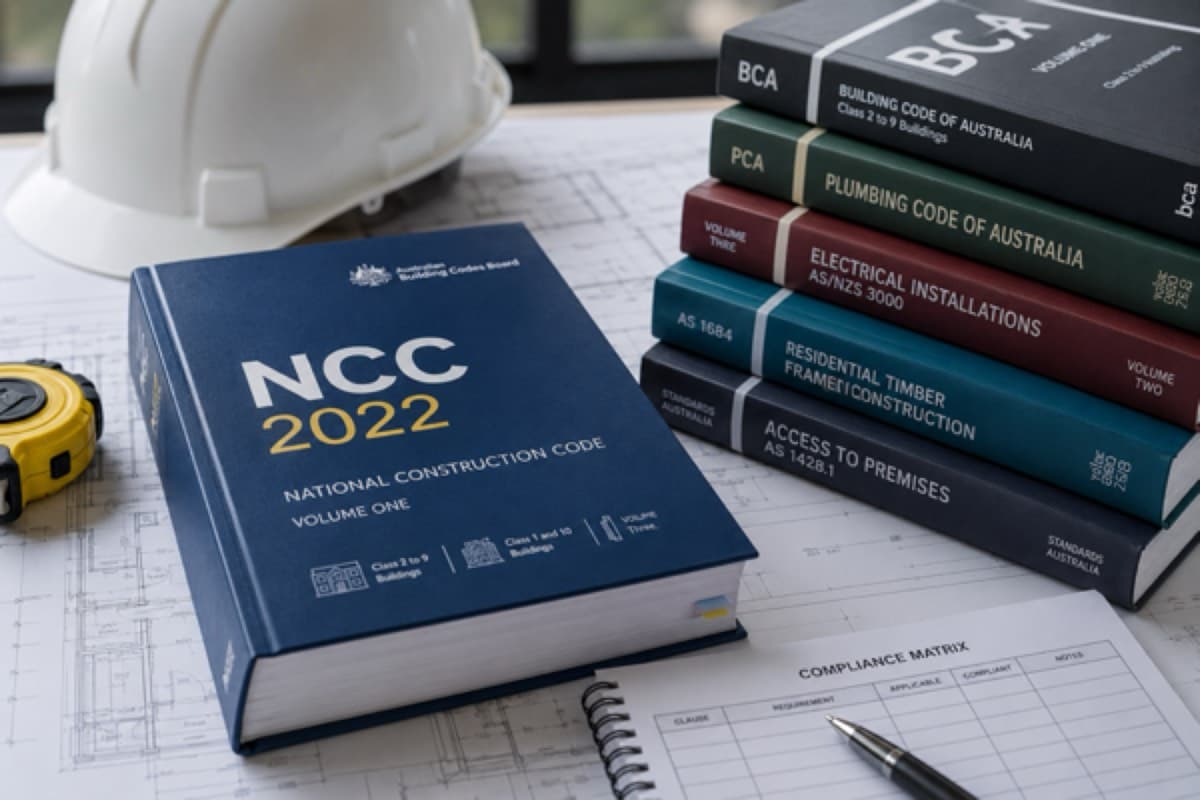
Amendment NCC 2022 published to align with the Premises Standards
Editorial Summary — Remedial Building Australia
The National Construction Code 2022 has been amended to align with the Premises Standards, creating consistency across Australian building regulations. This amendment addresses gaps between the NCC and the Premises Standards framework, ensuring that buildings designed and constructed under the updated code meet the harmonised requirements. The Housing Industry Association has published details of these changes, which affect how buildings must be assessed and certified for compliance across multiple regulatory domains.
For remedial building professionals and strata managers, this amendment clarifies the regulatory landscape for both new construction and existing building upgrades. Alignment between the NCC and Premises Standards reduces ambiguity when specifying remedial work, conducting defect assessments, or certifying compliance upgrades in Class 2 buildings. The changes may affect how building consultants, certifiers, and contractors approach waterproofing, structural, and façade rectification projects, particularly where standards have shifted or been clarified by this alignment.
Originally reported by Housing Industry Association | HIA. Editorial summary and analysis prepared by Remedial Building Australia.
Why It Matters
Remedial consultants and certifiers need to review how this NCC amendment affects existing defect scopes and compliance strategies. The Premises Standards alignment may change how waterproofing, façade, and structural work is specified and certified, particularly for strata buildings undergoing rectification. Design and Building Practitioners should confirm their compliance frameworks reflect the updated code position.
General observation only — not professional, legal, or engineering advice.
Source & Attribution
This article contains an editorial summary and industry commentary prepared by Remedial Building Australia. It does not reproduce original article wording. Remedial Building Australia is an independent industry information platform and is not affiliated with the original publisher. Content is general information only — not professional, legal, or engineering advice.
General Information Disclaimer
The information on this page is general industry information only and does not constitute legal, engineering, building, insurance, or professional advice. Users should seek independent professional advice relevant to their specific circumstances. While reasonable efforts are made to ensure accuracy, Remedial Building Australia does not guarantee the completeness or reliability of this information. Terms & Conditions
Related Resources on This Platform
More from Other
11 June 2026
Make stuff here...or else: A framework for deciding what Australia must produce, repair or regenerate domestically
Read9 June 2026
Letter from Phil Wilkinson – on what’s new in HVAC&R
Read
9 June 2026