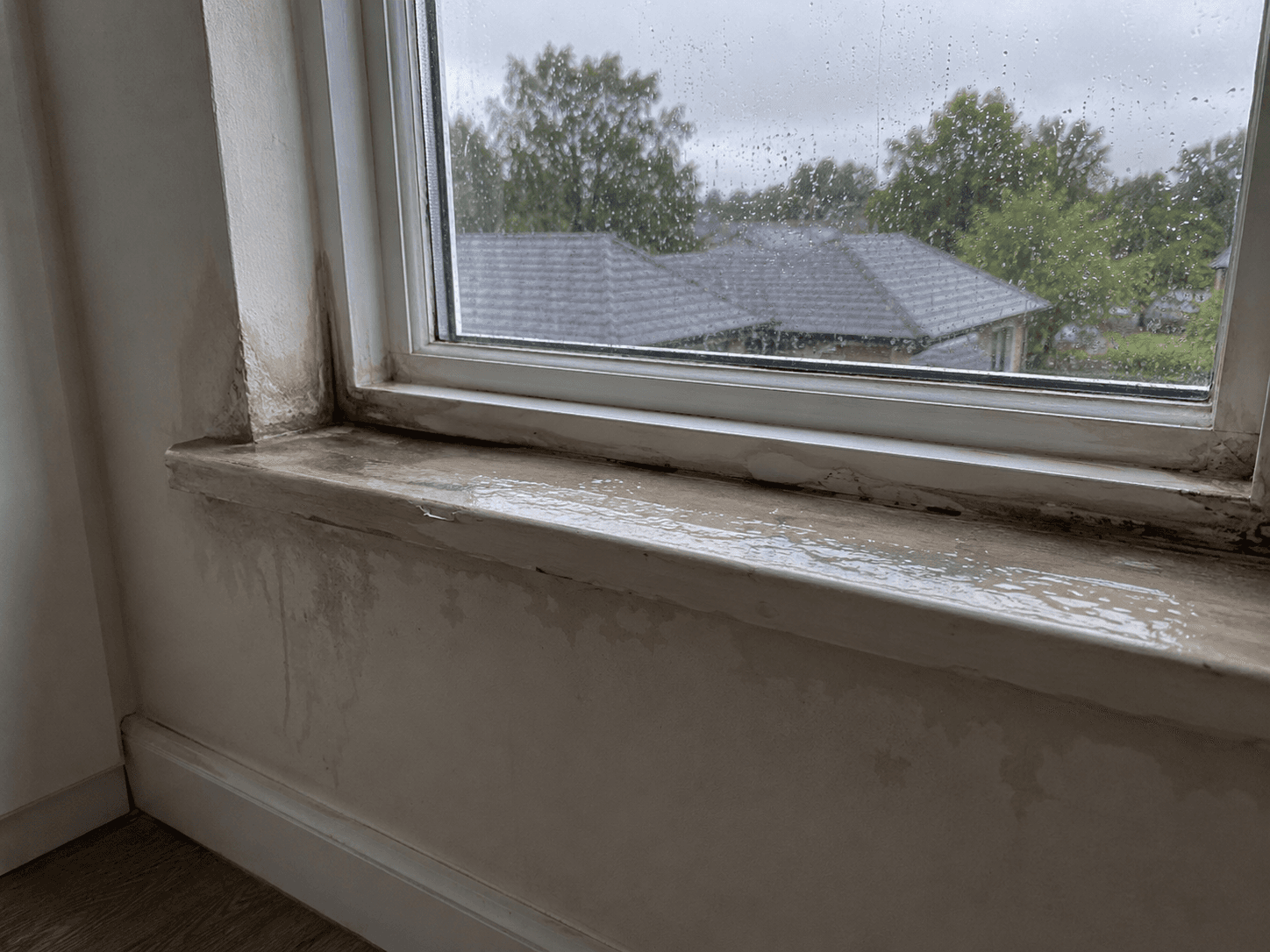
Why Window Leaks Are Often Misdiagnosed
Window leaks are usually blamed on the frame or failed silicone, but the real cause is often missing flashings, poor sill drainage, weak jamb detailing, or the wrong window for the wall type. Here's why so many window leak repairs fail — and what a correct diagnosis must actually consider.
Window leaks are often blamed on the window frame, failed silicone, or poor installation. While these can contribute to water ingress, many leaks are caused by missing or incorrect flashing, poor sill drainage, unsuitable window selection, or weak detailing around the surrounding wall system.
This is why many window leak repairs fail. The visible water entry point is not always the original source of the defect.
Missing Window Head Flashing
A window head flashing is designed to protect the top of the window opening and direct water away from the wall cavity and window frame.
Where the head flashing is missing, too short, poorly lapped, or incorrectly terminated, water can enter above the window and track into the internal wall. This is commonly mistaken for a simple sealant failure around the window frame.
Poor Sub-Sill Detailing
The sub-sill is a critical part of the window drainage system. It should allow water to drain away from the building and prevent water sitting below the window frame.
Leaks can occur where the sub-sill is flat, back-falling, poorly sealed, too short, or not properly integrated with the window frame and surrounding wall. Once water collects below the frame, it can enter internally through weak points in the sill or wall junction.
Lack of Cavity Flashing Below the Window Sill
In cavity wall construction, water that enters the wall cavity needs to be collected and discharged back outside.
Where there is no cavity flashing below the sill, water can continue travelling down the cavity or move into internal linings. The window may appear to be leaking, but the real issue is the lack of a proper drainage and flashing detail within the wall system.
Poor Jamb Detailing
The sides of the window are also common leak points, particularly during wind-driven rain.
Poor jamb detailing, missing end dams, poorly finished render returns, or incorrect sealing around side trims can allow water to enter beside the window. This is often difficult to diagnose because the water may appear internally at the sill or reveal, even though it entered through the side junction.
Defective Storm Moulds, Angles, and Trims
There should not be an open gap between the window frame and the surrounding wall. This junction must be properly sealed and protected using suitable sealant, storm moulds, angles, trims, flashings, or other compatible window details.
Leaks occur when these components are poorly installed, incorrectly lapped, badly sealed, or shaped in a way that traps or directs water into the building instead of shedding it away. During severe storms, wind pressure can drive water behind weak trims or storm moulds and into the wall.
Wrong Window Type for the Wall Construction
Not every window type suits every wall system.
A window that performs correctly in one construction type may fail when installed into a different wall system without suitable detailing. Brick veneer, cavity masonry, rendered masonry, lightweight cladding, and façade systems all require different flashing, sill, jamb, drainage, and fixing details.
This is a common issue where windows are replaced without properly adapting the surrounding construction details.
Blocked or Sealed Drainage Paths
Many window systems are designed to manage small amounts of water through drainage slots, weep holes, or frame drainage paths.
If these are blocked by render, paint, dirt, sealant, or poor installation, water can build up inside the frame and overflow internally. Sealing over these drainage paths can make the leak worse.
Over-Reliance on Sealant
Sealant is important, but it should not be treated as the entire waterproofing solution.
Where sealant is used to compensate for missing head flashings, poor sub-sill design, missing cavity flashings, or incorrect wall detailing, the repair is unlikely to provide a long-term solution. Sealant can deteriorate, debond, split, or trap water where drainage should occur.
Why Correct Diagnosis Matters
Window leaks should be assessed as part of the full external wall and window system, not just the frame.
A proper diagnosis should consider the head flashing, sill and sub-sill, cavity flashing, jamb detailing, storm moulds, trims, drainage paths, and whether the window type suits the wall construction.
Without identifying the actual defect, repairs often become repeated silicone patching, unnecessary window replacement, or ongoing internal water damage.
Related Defect Pages
Related Repair Systems
Disclaimer
This article is general information only and should not be relied on as project-specific advice. Remedial building works should be assessed by suitably qualified consultants, engineers, contractors or registered practitioners where required. Remedial Building Australia is an independent information platform and this content does not constitute professional, legal or engineering advice.