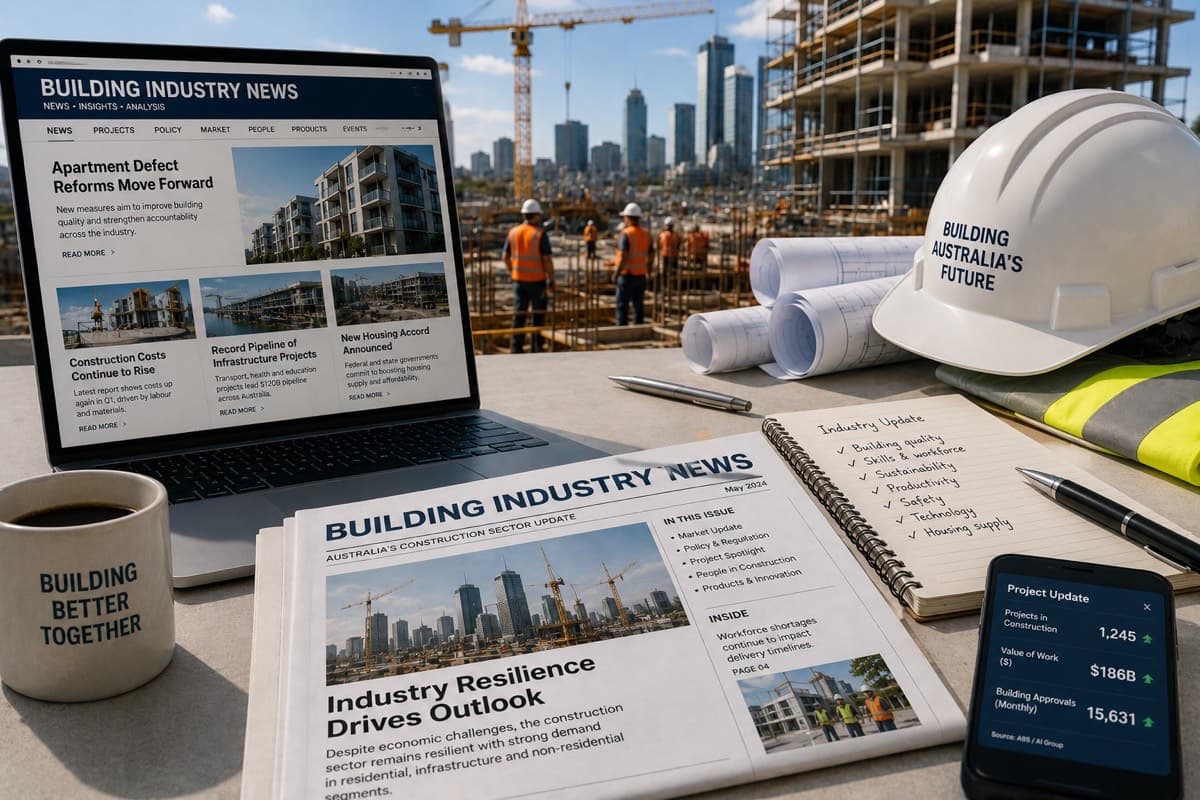
Big step forward by GBCA on building airtightness
Editorial Summary — Remedial Building Australia
The Green Building Council of Australia has moved forward with initiatives addressing building airtightness—a technical performance measure affecting thermal comfort, energy consumption, and indoor air quality in buildings. Airtightness relates to how well a building envelope resists uncontrolled air leakage through gaps, cracks, and construction joints. The GBCA's action suggests the sector is recognising airtightness as a measurable compliance requirement rather than a secondary consideration in design and construction.
For remedial building professionals and strata managers, building airtightness matters because poor airtightness often correlates with water ingress, thermal bridging, and condensation problems—common defects in existing apartment buildings. Tightening standards or rating systems pushes builders and certifiers to validate airtightness during construction and remediation work. This creates practical implications for defect investigation, building envelope testing, and the remedial strategies needed to bring non-compliant buildings up to standard, particularly in retrofits of ageing Class 2 residential buildings.
Originally reported by thefifthestate.com.au. Editorial summary and analysis prepared by Remedial Building Australia.
Why It Matters
Building airtightness standards affect how remedial consultants assess existing envelope defects, how contractors specify repairs, and how certifiers validate remedial work. GBCA movement in this area signals shifting market expectations around building performance documentation and testing protocols for both new construction and building upgrades.
General observation only — not professional, legal, or engineering advice.
Who May Find This Relevant
Source & Attribution
This article contains an editorial summary and industry commentary prepared by Remedial Building Australia. It does not reproduce original article wording. Remedial Building Australia is an independent industry information platform and is not affiliated with the original publisher. Content is general information only — not professional, legal, or engineering advice.
General Information Disclaimer
The information on this page is general industry information only and does not constitute legal, engineering, building, insurance, or professional advice. Users should seek independent professional advice relevant to their specific circumstances. While reasonable efforts are made to ensure accuracy, Remedial Building Australia does not guarantee the completeness or reliability of this information. Terms & Conditions
Related Resources on This Platform