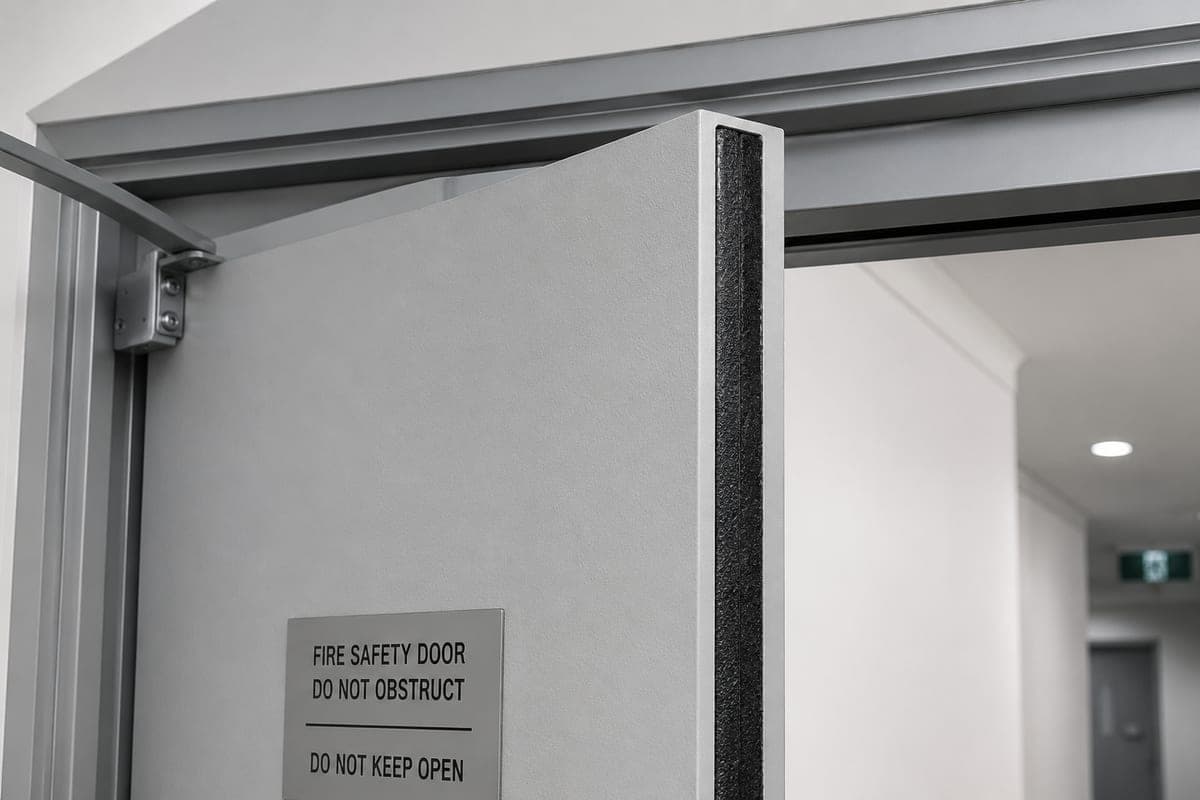
Why passive fire protection still matters
Editorial Summary — Remedial Building Australia
Passive fire protection continues to play a critical role in building safety strategies, complementing active fire systems. The article discusses why passive measures—such as fire-rated materials, compartmentation, and structural protection—remain essential in modern building design and remediation. These systems work independently of power or mechanical activation, providing a failsafe layer of protection that contains fire spread, protects escape routes, and preserves structural integrity during fire events. For remedial projects in existing buildings, particularly Class 2 apartments, passive fire protection upgrades often form part of compliance rectification work, especially where cladding or façade upgrades are underway.
Passive fire protection is relevant to Australian remedial contractors and building consultants managing fire safety upgrades on older apartment stock. Understanding the continued importance of these systems helps justify remedial investment and shapes specification decisions on materials, compartmentation, and structural protection during defect rectification projects.
Originally reported by Fire & Safety Journal Americas. Editorial summary and analysis prepared by Remedial Building Australia.
Why It Matters
Australian remedial practitioners and strata managers benefit from clarity on passive fire protection's role in building safety. This informs compliance decision-making for Class 2 fire safety upgrades, particularly on facade and compartmentation remediation where passive systems directly affect building code compliance and occupant safety outcomes.
General observation only — not professional, legal, or engineering advice.
Who May Find This Relevant
Source & Attribution
Editorial summary and industry commentary prepared by Remedial Building Australia. Original article wording is not reproduced. We are an independent platform, not affiliated with the original publisher. General information only — not professional, legal, or engineering advice.
General Information Disclaimer
The information on this page is general industry information only and does not constitute legal, engineering, building, insurance, or professional advice. Users should seek independent professional advice relevant to their specific circumstances. While reasonable efforts are made to ensure accuracy, Remedial Building Australia does not guarantee the completeness or reliability of this information. Terms & Conditions
Related Resources on This Platform